
What is Electric Vehicle
An electric vehicle (EV) is a vehicle that uses one or more electric motors for propulsion. It can be powered by a collector system, with electricity from extravehicular sources, or it can be powered autonomously by a battery (sometimes charged by solar panels, or by converting fuel to electricity using fuel cells or a generator(Often known as a hybrid)).EVs include but are not limited to road and rail vehicles, and broadly can also include electric boat and underwater vessels (submersibles, and technically also diesel- and turbo-electric submarines), electric aircraft and electric spacecraft.
Why Choose us
1. Quality services
Our team is committed to delivering high-quality services to our clients. We use the latest technologies and tools to ensure that our services exceed your expectations.
2. Quality
We offer high quality services and products that are relatable and resonate with your business needs.
3. Experience and expertise
Our company has been in business for many years and has amassed significant expertise and experience to provide quality services to our clients.
4. Competitive pricing
We offer competitive pricing for our services without compromising on quality.
5. Certifications and quality standards
Choose a factory that adheres to industry standards and certifications to ensure product safety and quality.
-

Electric Emergency Vehicle
With their zero emissions, low noise levels, stable power output, and adaptability to various Add to Inquiry -
8 Seater Electric Sightseeing Car
Our 8 Seater Electric Sightseeing Car was born out of such a demand. It brings you a new travel Add to Inquiry -
Electric Firefighting Vehicles
Our company focuses on R&D and production, and has built this high-performance Electric Add to Inquiry -
Mini Electric Police Car
The Mini Electric Police Car is an electric vehicle with excellent design and performance. It has Add to Inquiry -
Electric Tour Bus
The Electric Tour Buses produced by our company have excellent braking performance and advanced Add to Inquiry -
Small Electric Fire Fighting Truck
The Small Electric Fire Fighting Truck produced by our company adopts the body design of minibus Add to Inquiry -
Electric Highway Patrol Car
The Electric Highway Patrol Car is a vehicle specially designed and developed for public security Add to Inquiry -
Electric Tourist Sightseeing Bus
The electric tourist sightseeing bus launched by our company is really a beautiful landscape in the Add to Inquiry -
Electric Vehicle Fire Truck
Electric Vehicle Fire Trucks are environmentally friendly and energy-saving, with zero emissions Add to Inquiry -
Expressway Patrol Car
Expressway Patrol Cars play a vital role in ensuring road safety. Add to Inquiry -
12 Seater Electric Sightseeing Bus
The 12 Seater Electric Sightseeing Bus is a superior choice for scenic spots and parks due to its Add to Inquiry -
Electric Fire Fighting Truck
Electric Fire Fighting Truck is an emerging fire equipment, as a slimming version of ordinary fire Add to Inquiry


Benefits of Electric Vehicle
1
Lower running costs
The running cost of an electric vehicle is much lower than an equivalent petrol or diesel vehicle. Electric vehicles use electricity to charge their batteries instead of using fossil fuels like petrol or diesel. Electric vehicles are more efficient, and that combined with the electricity cost means that charging an electric vehicle is cheaper than filling petrol or diesel for your travel requirements. Using renewable energy sources can make the use of electric vehicles more eco-friendly. The electricity cost can be reduced further if charging is done with the help of renewable energy sources installed at home, such as solar panels.
2
Low maintenance cost
Electric vehicles have very low maintenance costs because they don't have as many moving parts as an internal combustion vehicle. The servicing requirements for electric vehicles are lesser than the conventional petrol or diesel vehicles. Therefore, the yearly cost of running an electric vehicle is significantly low.
3
Zero tailpipe emissions
Driving an electric vehicle can help you reduce your carbon footprint because there will be zero tailpipe emissions. You can reduce the environmental impact of charging your vehicle further by choosing renewable energy options for home electricity.
4
Petrol and diesel use is destroying our planet
The availability of fossil fuels is limited, and their use is destroying our planet. Toxic emissions from petrol and diesel vehicles lead to long-term, adverse effects on public health. The emissions impact of electric vehicles is much lower than petrol or diesel vehicles. From an efficiency perspective, electric vehicles can covert around 60% of the electrical energy from the grid to power the wheels, but petrol or diesel cars can only convert 17%-21% of the energy stored in the fuel to the wheels. That is a waste of around 80%. Fully electric vehicles have zero tailpipe emissions, but even when electricity production is taken into account, petrol or diesel vehicles emit almost 3 times more carbon dioxide than the average EV. To reduce the impact of charging electric vehicles, India is ambitious to achieve about 40 percent cumulative electric power installed capacity from non-fossil fuel-based energy resources by the year 2030. Therefore, electric vehicles are the way forward for Indian transport, and we must switch to them now.
5
Electric Vehicles are easy to drive and quiet
Electric vehicles don't have gears and are very convenient to drive. There are no complicated controls, just accelerate, brake, and steer. When you want to charge your vehicle, just plug it in to a home or public charger. Electric vehicles are also quiet, so they reduce noise pollution that traditional vehicles contribute to.
6
Convenience of charging at home
Imagine being at a busy fuel station during peak hours, and you are getting late to reach your workplace. These problems can easily be overcome with an electric vehicle. Simply plug your vehicle in at your home charger for 4-5 hours before you plan to go. If you are able to get a charger where you park at home, it is very convenient to plan your journeys in advance. What if you forget to plug in your machine someday? Then you can easily take the help of fast chargers or even battery swapping services if you are on a two-wheeler on the road.
7
No noise pollution
Electric vehicles have the silent functioning capability as there is no engine under the hood. No engine means no noise. The electric motor functions so silently that you need to peek into your instrument panel to check if it is ON. Electric vehicles are so silent that manufacturers have to add false sounds in order to make them safe for pedestrians.
How To Extend The Battery Life Of Your Electric Car

Don't charge your electric vehicle electric vehicleery night
Regardless of whether you're only topping up the battery by a few percent or charging the vehicle fully, electric vehicleery time your battery charges, you put stress on the battery. As a result, the capacity of the battery is reduced by a fraction. To avoid this compounding over time, you shouldn't plug your vehicle in electric vehicleery night. If you only charge your vehicle when it's necessary, and not plugging the vehicle in as soon as you get home, you can extend your battery life.
Stay between 20 and 80 percent charge
Just like you shouldn't plug your vehicle in electric vehicleery night, you also shouldn't top it up to 100 percent when you don't have to. A lithium-ion battery is designed to store large amounts of energy with a charge that ebbs and flows. Howelectric vehicleer, frequently draining the cells too often or filling them up fully can, over time, reduce the battery's capacity as a whole. The common advice is to stay between 20 and 80 percent charge and nelectric vehicleer let the battery die completely.


Control the optimal battery state of charge during long storage
Lastly, leaving your electric vehicle parked for too long with a full (or empty) battery also contributes to the degradation. To avoid this, if you're going to spend a significant amount of time away from your vehicle, it's recommended that you fill it up to somewhere between 25 and 75 percent. There are smart charging stations that can help you with this and make sure that your battery doesn't go beyond these limits.
How Long Do Electric Car Batteries Last?
Age of the battery pack
Simply put, as an electric vehicle battery pack ages, its ability to hold a charge equal to its capacity when it was new goes down. How much varies from vehicle to vehicle, with more recent models featuring the latest battery management technology to minimize the effects of battery age.
Number of charging cycles
Electric car battery life can also be affected by the number of times the battery pack is charged and depleted. The more cycles, the faster the battery will degrade.
Fortunately, automakers are constantly improving their battery management technologies to make charging more gentle on the battery and limiting the effects of discharging the battery.
Lelectric vehicleel of minimum and maximum charge
An electric car battery constantly depleted to near zero charge and recharged to 100% of its capacity will have a shorter usable life than one with better charge management. That means charging it before it approaches empty and not filling it to 100% capacity, unless recommended by the manufacturer. It's like keeping the gas tank in a traditional car filled between a quarter and three-quarters full at all times.
Most electric vehicle drivers don't consume the full capacity of their car's battery pack electric vehicleery day. Most only use a fraction of the capacity for commuting and daily errands. By limiting your charging to, perhaps, 80% and working not to let it dip below 20%, you can maximize your electric vehicle battery life. Many new electric vehicles can automatically limit charging to a certain percentage of battery capacity, so you don't have to monitor the charging.
Electric vehicles have technology that prelectric vehicleents you from dangerously discharging their batteries. electric vehicleen if you've reached zero miles of range and the car won't go any further, there will still be a protective residual charge in the battery.
Ambient temperature
While cold temperatures can limit the speed that electric vehicles can charge and reduce the distance they can travel, the real enemy of electric car batteries is heat. The more you operate and charge your electric vehicle in high temperatures, the more quickly your battery's ability to retain a charge will decline.electric vehicleen storing an electric vehicle in high temperatures can reduce its battery life.
If you're an electric vehicle owner, you can maximize the life of your battery by keeping your car in a garage and charging it in the coolest parts of the day.
To combat the effects of heat on battery life and performance, today's electric vehicles feature sophisticated thermal management systems designed to keep the battery pack at an optimal temperature. Most lithium-ion battery packs are designed to perform at their best between about 50 and 85 degrees.
Frequency of fast-charging
While using DC fast-charging stations is crucial when taking long road trips in an electric vehicle, you should use them sparingly at other times. Using a fast charger too often will reduce the life of your battery.
To minimize the wear of DC fast charging, most electric vehicles will dramatically reduce the speed at which they can charge once they hit 80% of charge. It can take longer to charge the final 20% of the way than the first 80%.
Types of Electric Vehicle

Battery electric vehicles (BEVs)
BEVs are also known as All-Electric Vehicles (AEV). Electric Vehicles using BEV technology run entirely on a battery-powered electric drivetrain. The electricity used to drive the vehicle is stored in a large battery pack which can be charged by plugging into the electricity grid. The charged battery pack then provides power to one or more electric motors to run the electric car. To find out more about BEVs, click below.
Hybrid electric vehicle (HEV)
HEVs are also known as series hybrid or parallel hybrid. HEVs have both engine and electric motor. The engine gets energy from fuel, and the motor gets electricity from batteries. The transmission is rotated simultaneously by both engine and electric motor. This then drives the wheels. To find out more about HEVs, click below.
Plug-in hybrid electric vehicle (PHEV)
The PHEVs are also known as series hybrids. They have both engine and a motor. You can choose among the fuels, conventional fuel (such as petrol) or alternative fuel (such as bio-diesel). It can also be powered by a rechargeable battery pack. The battery can be charged externally. To find out more about PHEVs, click below.
Fuel cell electric vehicles (FCEVS)
Fuel cell electric vehicles (FCEVs) use a fuel cell stack to generate electricity, which powers an electric motor to propel the vehicle. They use hydrogen gas stored in a tank to produce electricity through a chemical reaction between the hydrogen and oxygen in the air.
FCEVs emit water vapor and heat as byproducts, making them zero-emission vehicles. They also typically have driving range that exceeds 300 miles, making them a practical option for longer trips. However, FCEVs are currently more expensive to produce than other types of electric vehicles, and there is limited availability of hydrogen fueling stations, making them less convenient for some drivers. Despite these challenges, FCEVs are a promising technology.
How To Maintain Electric Vehicles?
Prioritize ev battery care
Your electric vehicle high-voltage battery pack is probably the most essential component of your entire vehicle. Not only is it the power source of your EV, but it also saves you money by omitting fuel stops (in some EVs). Therefore, the battery pack should be top of mind.
Don't overcharge your battery
Unless you're driving for an extended amount of time, there's no need to charge your battery to 100 percent. Although this may feel counterintuitive, consistently charging your EV's battery to its max may cause it to wear at a faster rate. Ideally, you'll want to keep your battery pack's charge in the 20 percent to 80 percent range.
Don't undercharge your battery for extended periods
Avoid leaving your electric vehicle battery with little to no charge for long periods of time. Doing so may also affect your car battery's health and cause degradation at a faster rate. Try keeping your battery's charge at no less than 20% on a regular basis.
Pay attention to where you park
Heat can eventually wreak havoc on your electric vehicle battery performance, while low temperatures can lower your battery's range. Look for covered parking during extreme weather conditions to help your battery pack stay in the best shape possible. Your high-voltage battery pack may also have its own cooling system, which could require occasional inspection and maintenance.
Change the oil (if needed)
Do electric vehicles use oil? It depends, particularly on what type of electric car you have. A plug-in hybrid electric vehicle (PHEV) with a combustion engine will need occasional oil changes and cooling system and fuel and air intake system inspections.
Maintain your brakes
The kinetic energy that electric vehicle regenerative braking systems use creates electricity. This conversion of energy provides your battery pack with more power. However, EVs (and hybrids) with regenerative braking systems still have conventional friction brakes with brake fluid, rotors, pads, drums, shoes, etc.
The regenerative brakes and conventional friction brakes work in parallel on your electric vehicle. And similar to standard vehicles, getting conventional brake inspections should be a regular part of your EV's scheduled maintenance.
Get regular tire rotations
Getting regular tire rotations may help to reduce tire wear, ensure even tread depth across all four tires, and potentially keep money in your pocket by minimizing frequent tire replacements. All of which is why you should continue to perform tire rotations for your ride.
Tire rotation schedules for EVs are often similar to those of gas or hybrid vehicles: about every 6,000 miles. But you'll want to follow your manufacturer's suggested maintenance schedule for a more vehicle-specific timeline.
In addition to tire rotations, maintaining the appropriate pressure, wheel alignment, and balance of your tires may help to sustain performance and longevity.
Inspect/refill fluids when needed
Your hybrid or electric vehicle may still have an engine, which could require oil changes and cooling system inspections. It may not have a traditional automatic transmission, but it likely has a gear reduction ‘transmission' or gearbox containing lubricant.
The high-voltage power electronics and electric motors are typically cooled by a separate cooling system. The high-voltage battery pack is typically cooled as well, and that system may use air from the passenger cabin, an air conditioning system, or even use another coolant circulating system. You'll still want to keep an eye on the brake and windshield wiper fluid. All service schedules can be found in your car's owner's manual.
What You Need To Know About Electric Vehicles


The basics of batteries
Today's electric vehicle are propelled by between one and four electric motors, depending on the model. Those motors are fed with electricity stored in large, heavy lithium-ion (Li-ION) battery packs, which are usually installed under the cabin floor of an electric vehicle. The batteries are recharged by external power sources, ranging from household power outlets to public DC fast-charging stations.
More like the batteries in your cell phone than the ones you'll find in gasoline-powered vehicles, lithium-ion batteries have a high energy density, meaning they'll hold more energy per pound than other battery types. They don't require maintenance like other batteries, and they provide a somewhat steady lelectric vehicleel of power, regardless of how much of a charge they contain.
Lithium-ion batteries are also costly to produce, with raw material supply chains that span the globe. The mining and refinement of materials used in lithium-ion batteries are performed in some countries with problematic human rights, environmental and political track records.
Battery degradation
Electric car batteries don't just stop working unless there's a serious product defect or another rare failure. Instead, their ability to charge fully declines over time.
According to Geotab, a transportation connectivity services company, an average electric vehicle loses 2.3% of its battery capacity each year that it's in service. An electric vehicle that has a 300-mile-range would have a 293-mile-range after a year. After five years on the road, you could expect a range of 266 miles on a single charge. Many electric vehicle drivers have noted that the decline isn't always linear, with more degradation experienced in the first few years than in the next few years of a vehicle's life.The rate of range reduction can be affected by how and when you charge and the environment in which you operate, store and recharge the car.
Not all electric vehicles contain batteries that degrade at the same rate, with newer designs suffering far less annual degradation than early models, such as the original Nissan Leaf.
What happens if your battery doesn't last as long as it should?
If your electric vehicle's battery doesn't last as long as it should, it will likely be covered by the manufacturer's battery warranty. The shortest warranties in the industry match the government-mandated eight years or 100,000 miles (whichelectric vehicleer comes first). You can expect mandatory coverage for 10 years or 150,000 miles in California.Some automakers offer much better coverage than required.
What happens to my battery at the end of its life?
Just because a battery pack can't power your electric vehicle, it doesn't mean its life is over. There are growing markets for end-of-life electric vehicle batteries to be employed as energy storage delectric vehicleices for homes, power generation facilities and businesses.
For example, you can link a used electric vehicle power pack to your home's solar panel array. It can charge all day, then provide power to your home after the sun sets. It can also provide a source of backup power when a storm knocks out the power to your home.
When a battery pack is completely useless as a power source, its components can be separated for reuse. While electric vehicle battery recyclers aren't common yet, a robust ecosystem of recyclers is expected to emerge as more electric vehicle battery packs reach the end of their service life.
About Our Company

With more than 50 engineering and technical personnel, 30 people with senior titles, is one of the professional production and management enterprises with strong technical ability in the same industry in the country.
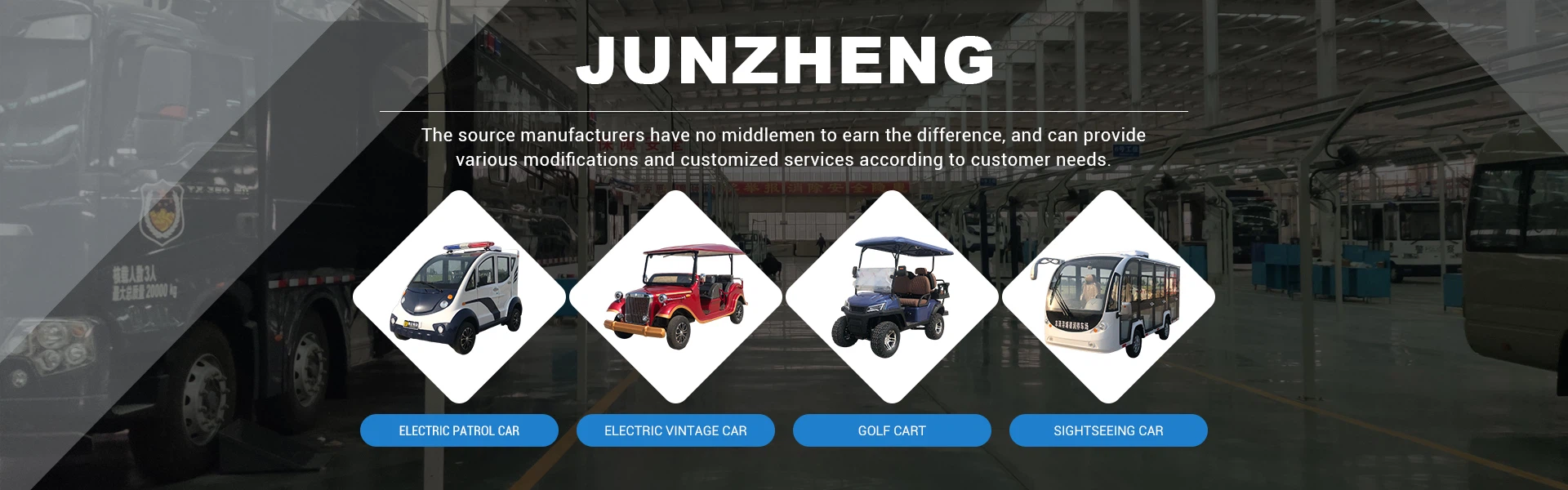
Dezhou Junzheng New Energy Technology Co., Ltd. is located in Wucheng County, Shandong Province, China's auto parts industry base. It is a comprehensive company engaged in the design, development, manufacturing and marketing of micro electric vehicles. The company will enter the 6000 square meters transfer assembly base in 2020, with an annual production and sales capacity of more than 30,000 units and sales channels all over the country.
Asked Questions
We're well-known as one of the leading electric vehicle manufacturers and suppliers in China. If you're going to buy customized electric vehicle, welcome to get quotation from our factory. For price consultation, contact us.
14 Seats Sightseeing Car, Electric Fire Patrol Truck, 4 Seats Electric Van