
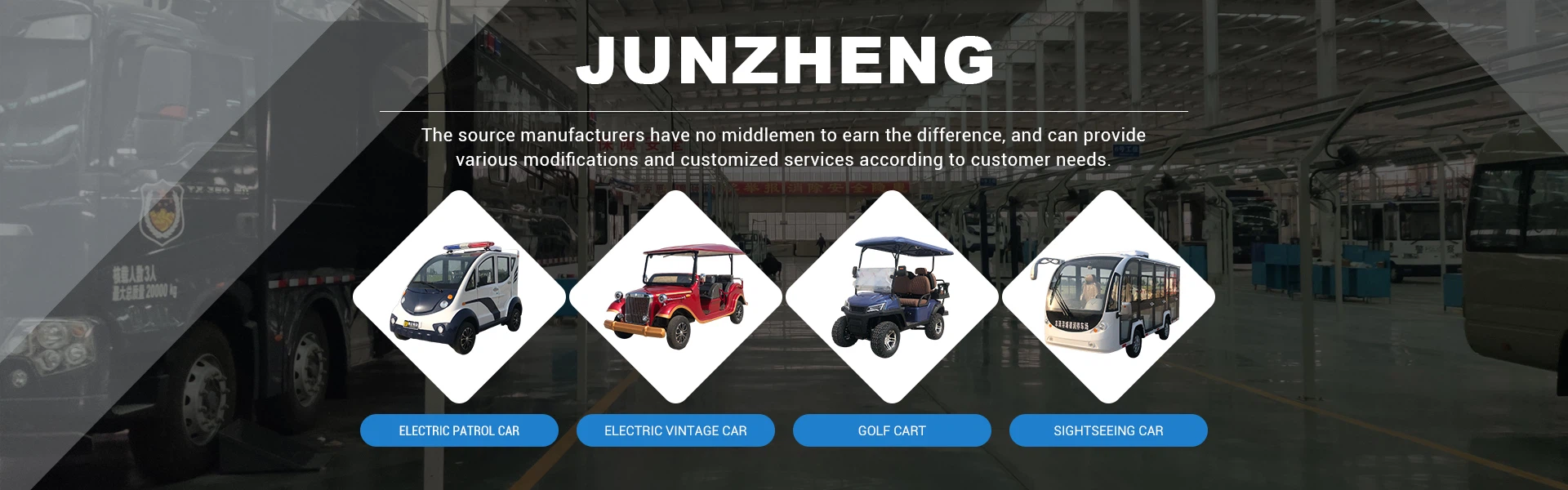
What is Electric Vintage Cars
Electric vintage cars are vintage cars that have been retrofitted with electric powertrains. The process involves removing the internal combustion engine and replacing it with an electric motor, battery pack, and other necessary components.
Why Choose us
1. Quality services
Our team is committed to delivering high-quality services to our clients. We use the latest technologies and tools to ensure that our services exceed your expectations.
2. Quality
We offer high quality services and products that are relatable and resonate with your business needs.
3. Experience and expertise
Our company has been in business for many years and has amassed significant expertise and experience to provide quality services to our clients.
4. Competitive pricing
We offer competitive pricing for our services without compromising on quality.
5. Certifications and quality standards
Choose a factory that adheres to industry standards and certifications to ensure product safety and quality.
-

Electric Vintage Car
Environmental protection and energy saving: Electric Vintage Car uses electric energy as the power Add to Inquiry -
Electric Sightseeing Classic Car
Electric Sightseeing Classic Car is an environmentally friendly passenger vehicle specially Add to Inquiry -
Classic Style Electric Car
The Classic Style Electric Car is an environmentally friendly means of transportation that combines Add to Inquiry -
Classic Electric Vehicles
The Classic Electric Vehicles launched by our company has excellent endurance and classic design as Add to Inquiry -
Pastoral Sightseeing Classic Car
The Pastoral Sightseeing Classic Car, a special means of transportation designed for rural tourism, Add to Inquiry -
Electric Vintage Vehicles
In today's era of pursuing environmental protection and sustainable development, Electric Vintage Add to Inquiry -
Classic Sightseeing Car
As a transportation tool for tourist attractions, resorts, large parks and other places, Classic Add to Inquiry -
Electric Antique Car
The Electric Antique Car is a special vehicle that combines the design elements of a classic car Add to Inquiry -
New Electric Vintage Car
As a green travel tool that combines classical and modern design concepts, the unique charm of New Add to Inquiry -
New Vintage Electric Car
In recent years, the Electric vehicle industry has been developing vigorously. As a clear current Add to Inquiry -
Electric Powered Classic Car
Electric Powered Classic Cars, as the treasures of automobile history, usually refer to those Add to Inquiry -
Vintage Sightseeing Tour Car
Vintage Sightseeing Tour Car has a unique charm and style. It usually has a retro appearance Add to Inquiry


Benefits of Electric Vintage Cars
1
Eco-friendly
One of the most significant benefits of electric vintage cars is that they are eco-friendly. These vehicles produce no emissions, making them ideal for environmentally conscious individuals. With the increasing concern for the environment and the need to reduce carbon emissions, electric classic cars provide a great solution. According to a recent research by the International Council on Clean Transportation, electric automobiles produce significantly lower greenhouse gas emissions over their lifetime than their gasoline-powered equivalents. In truth, electric automobiles have no environmental impact in the UK and the majority of Europe, where renewable energy is a key source of our power.
2
Cost savings
Electric vintage cars are sustainable not only for the environment but also for your finances. While they may have a higher upfront cost than traditional classic cars, they can save you money on fuel. As gasoline prices continue to rise, electric classic cars provide a great alternative to traditional cars. In fact, studies show that you will recover your investment over a period of 5-8 years, and as gas prices and taxes rise, this period will become even shorter!
3
Lower maintenance costs
Converting into electric vintage cars also means lower maintenance costs, and it's not only gasoline; because electric cars feature an electric motor rather than an ICE (internal combustion engine), they need less maintenance because they have considerably fewer moving parts than gasoline vehicles. During the course of your electric car's life, you'll spend less on oil changes, tune-ups, and other maintenance expenses. So the upfront costs would definitely be worth it!
4
Enhanced performance
A classic car requires a lot of maintenance to keep it running smoothly and looking brand new. After conversion, you can use the car every day without having to worry about running out of gas or shelling out too much money for maintenance. Electric motors offer instant torque, providing a smooth and quiet driving experience. Electric classic cars can reach their maximum torque at any speed, unlike combustion engines, which require you to shift gears. So why not use an electric conversion every day since it will always start, heat up instantly, and have all the benefits of a modern car.
5
Prolonging the life of your classic
Many people have strong emotional bonds with their historic automobiles, and turning your car into an electric vehicle will prolong those bonds for years to come. Except for the absence of an exhaust pipe, electric car conversions do not alter the outside appearance of the vehicle, thereby letting you enjoy the beauty and charm of your classic without sacrificing comfort and convenience.
6 Things To Consider Before Converting Your Classic Car To Electric
Cost
Electric vintage cars can tailor a conversion closely to your budget, it's an expensive process, but the investment certainly pays itself off when there's no fuel cost or vehicle tax to deal with! For example, a basic, 100-mile range conversion without power steering or interior heating will be much cheaper than a 300-mile range, 450 horsepower Tesla motor conversion!


Performance
The power of an electric conversion is usually significantly higher than its original engine. This means that suspension, brakes, and other parts of the drivetrain may need to be upgraded too. There's never a doubt that your electric conversion will go from 0-60 faster than the original engine. You need to consider whether you are upgrading the drivetrain enough to need to upgrade other parts of the car.
Range
The range of an electric vintage cars depends on the size of the battery you choose and how you drive. If you are only going to use your car for short trips, then you may not need a large battery. Electric Car Converts offer a variety of battery options, so you can choose the one that best suits your needs. Also, conversions are completely modular, so if you wish to extend your range at a later date, add another battery box and you can double or triple your EV range!


Maintenance
Electric vintage cars require less maintenance than gas-powered cars, but you will still need to perform some basic maintenance to parts beyond the engine. This mostly revolves around brakes, suspension, and the drivetrain. Forget about oil changes, filters, belts, and alternators – as electric motors only have one moving part (compared to roughly 500 in a combustion engine) there's only one thing to look after!
Availability of parts
Electric vintage cars were of course not built for electric power, so various parts need to be replaced or modified to run on electrics. These are things such as brake vacuums, power steering pumps, and cabin heating systems. However, with the growing popularity of electric cars, it is now easier to source parts and accessories both new and used, so finding what's needed isn't difficult.


Amount of work required
Working with classic electric vintage cars on its own can test your patience, couple this with high-voltage electrical systems and you're in for a big job, not for the faint-hearted. With classic cars, never underestimate the fact that you're always one rounded or even snapped bolt away from hours of suffering. It's important not to rush, voltages can be deadly, so spend the extra time ensuring things are wired up correctly!
Your Electric Vintage Cars Maintenance Schedule
Every 30 days
● Check the tire pressure.
● Examine the tires for excess wear.
● Check the windshield washer fluid and fill if needed.
Every 7,500 miles
● Have the tires rotated.
● Check the coolant level of the battery.
● Check the cabin heater, power inverter, accessory power, and charger modules.
● Inspect the brakes, steering, suspension, and chassis components for unusual wear or damage.
● Check the power steering and drive shafts for wear.
● Lubricate the door locks and inspect the gas struts for signs of suspension wear.
● Check the vehicle’s various light bulbs and replace if necessary.
At 15,000 miles
● Replace the windshield wiper blades.
At 36,000 miles
● Replace the cabin air filter.
At 75,000 miles
● Replace the suspension gas struts.
● Drain and service the coolant circuits.
How To Extend The Battery Life Of Your Electric Vintage Cars
Don't charge your electric vintage cars every night
Regardless of whether you're only topping up the battery by a few percent or charging the vehicle fully, every time your battery charges, you put stress on the battery. As a result, the capacity of the battery is reduced by a fraction. To avoid this compounding over time, you shouldn't plug your vehicle in every night. If you only charge your vehicle when it's necessary, and not plugging the vehicle in as soon as you get home, you can extend your battery life.

Stay between 20 and 80 percent charge
Just like you shouldn't plug your vehicle in every night, you also shouldn't top it up to 100 percent when you don't have to. A lithium-ion battery is designed to store large amounts of energy with a charge that ebbs and flows. However, frequently draining the cells too often or filling them up fully can, over time, reduce the battery's capacity as a whole. The common advice is to stay between 20 and 80 percent charge and never let the battery die completely.

Control the optimal battery state of charge during long storage
Lastly, leaving your electric vintage cars parked for too long with a full (or empty) battery also contributes to the degradation. To avoid this, if you're going to spend a significant amount of time away from your vehicle, it's recommended that you fill it up to somewhere between 25 and 75 percent. There are smart charging stations that can help you with this and make sure that your battery doesn't go beyond these limits.

What Are The Main Do's And Don'Ts of an Electric Vintage Cars?
Don't leave your electric vintage cars in extreme heat for extended periods
+
-
One of the issues electric vintage cars can have is that they don't like extreme temperatures. As batteries discharge energy, they generate heat, and when combined with very hot weather, the components within them can struggle.
If your electric vintage cars is left out in the sun too long and overheats, this can accelerate battery degradation. You can avoid this by charging at night or in the shade where possible and avoid long journeys in extreme heat.
Do keep your electric vintage cars charged between 20%-80%
+
-
Charging up to 100% each time can put a strain on your battery so to maximise its lifespan, aim to keep it charged anywhere between 20%-80%. By doing so and minimising rapid charging you will prolong the range your car battery is capable of.
Do arrange a sensible charging plan that aligns with your needs
+
-
It's estimated about 80% of EV owners charge theirs at home so it makes sense to arrange a high-performance charging solution at your place of residence.
For fast, cost-effective charging, consider a wall-mounted smart charger. An arrangement like our monthly Smart evCharger Plan will install an EV charger and charge your car when energy rates are lower.
Don't head off on long journeys without planning your route
+
-
If you're taking a long journey that exceeds your EV's range, be sure to plan ahead. Whether that means identifying where you can recharge along the way to taking a charger with you, don't run out of battery power!
Do maintain your electric vintage cars regularly
+
-
One of the benefits of electric vintage cars is that they require fewer costly services, however you still need to look after it. Like any car, EVs need their tyres, brakes and fluid levels checked on a regular basis so schedule in time to do this.
Top 10 Rules For Maintaining Your Electric Classic Car Electrical System


Fuses–check they are the correct rating and free of corrosion–all in professionals if you are not sure.
Accessory wiring–beware of ‘get it working for now wiring ’bodged jobs and get any'strung across' spurious wiring checked and removed if redundant. Think ‘BBC'–Beware Blue Connectors!
Dynamo/Alternator and their associated wiring–get them checked professionally to make sure they are suitable and in good order.
Wipers–check linkages, arms, blades and cables, excessive wear will cause electrical failure, especially if it rains in the summer too.
Washers–keep good quality fluid in the tank and check for proper operation every month.
Switches–make sure they work without fiddling and you know exactly what each one does (a mate's daughter was late for her wedding, really late in fact as the stand in driver did not know the classic Jag had twin tanks!)
Lights–ensure good quality bulbs have been replaced recently and all are working as they should.
Consider a new loom if the wiring is over 30 years old–the looms are available from specialists for most old British cars–have it inspected professionally, proper routing and clipping is very important.
Always ensure that the cooling fan system is properly switched, fused and wired. Most pre 80s cars will have had an after market electric type fan fitted by a DIY/well meaning mechanic. Ensure the control thermostat is set correctly and the gauge is working and reasonably accurate. Closely linked to the engine cooling is the oil pressure gauge and lamp itself. Engine rebuilds are costly and often the result of a chain reaction stemming from cooling system failures, started by a dodgy electric cooling fan set up or a non functioning oil lamp.
Try to avoid DIY modifications to add things like alarms, trackers, central locking, power windows.
About Our Company

With more than 50 engineering and technical personnel, 30 people with senior titles, is one of the professional production and management enterprises with strong technical ability in the same industry in the country.
Dezhou Junzheng New Energy Technology Co., Ltd. is located in Wucheng County, Shandong Province, China's auto parts industry base. It is a comprehensive company engaged in the design, development, manufacturing and marketing of micro electric vehicles. The company will enter the 6000 square meters transfer assembly base in 2020, with an annual production and sales capacity of more than 30,000 units and sales channels all over the country.
Asked Questions
Q: Can you make a vintage car electric?
A: Classic electric car conversions are becoming increasingly popular as an eco-conscious way of enjoying classic vehicles. Removing the combustion engine and replacing it with a zero-emission powertrain is a great way to revitalise older model.
Q: What is the concept of electric vehicle?
A: An EV is defined as a vehicle that can be powered by an electric motor that draws electricity from a battery and is capable of being charged from an external source.
Q: Why convert classic car to electric?
A: Converting a classic to electric does not only save you money on fuel bills, road tax and congestion charges - you'll also spend less on maintenance and servicing costs as electric drive systems are maintenance-free. No more plumes of smoke or smell of petrol, just sit back, relax and enjoy the silent, reliable ride.
Q: How long do electric cars last?
A: Many experts peg the lifespan of an EV battery at between 100,000 and 200,000 miles. If your EV's battery fails before that, it will likely be covered by the manufacturer's warranty.
Q: Why are vintage cars good?
A: Nostalgia: Classic cars take you back to a different time. Whether it's the vehicle's style or the memories it elicits from days gone by, classic cars often provide a sense of nostalgia, and you'll be able to connect with other classic car owners at events.
Q: Why vintage cars are better than modern cars?
A: Since they lack modern tech and safety features, classic cars have a more hands-on driving experience, and they can be easier to work on yourself. And while newer cars will depreciate with age, classic car values tend to appreciate due to supply and demand, especially for well-maintained ones.
Q: Why are electric cars more powerful?
A: A standard car's horsepower is about 120hp. In contrast, Tesla's Model S delivers between 360 – 470hp. Because EVs' electric motors generate instant linear torque, they have more horsepower. As soon as the accelerator is pushed, the motor instantly delivers power to the wheels.
Q: Will electric cars last longer than gas cars?
A: With regular use, the average lifespan of a gas vehicle is 150,000 miles or eight years, and EVs can last up to 200,000 miles, or about 12 years.
Q: Why are electric cars more popular?
A: Demand for EVs has grown markedly over the past decade thanks to heightened environmental concerns, greater availability of models, increased cost competitiveness with conventional gas vehicles, and improved vehicle ranges.
Q: Will an EV last 20 years?
A: Of the EVs like some Tesla models and the Nissan Leaf that have been around for more than eight years, very few of the batteries have been replaced, implying that the lifetime of an EV battery, with proper care, could be more than ten and perhaps as much as 20 years.
Q: What is the lifespan of an EV?
A: The average lifetime mileage of an ICE vehicle is about 133,000 miles. While experts estimate the average EV battery will last around 200,000 miles, some manufacturers already promise much more than that.
Q: Do electric cars lose charge when parked?
A: Whilst lithium ion batteries do lose charge when the car is parked for an extended period, the good news is that this is usually a very minimal amount of the overall charge. Most electric cars can expect to lose only lose a few percent of their charge a month if sitting idle.
Q: What are controllers in EV?
A: The electric vehicle controller is the electronics package that operates between the batteries and the motor to control the electric vehicle's speed and acceleration much like a carburetor does in a gasoline-powered vehicle.
Q: What guarantees do I get for my EV parts?
A: We provide guarantees on all EV parts and since our systems are simple and separate in parts it's very easy and cheap to replace any part. It's even much cheaper than replacing parts on regular gasoline or diesel car..
Q: Can you jump start an electric car?
A: Summary. You can jump start an EV with another car, but manufacturers generally advise against jump starting an ICE car or an electric car with another EV. It can cause damage to the main and smaller battery, software and other components.
Q: Can you push an electric car if it runs out of battery?
A: Electric cars can be shifted into neutral and pushed over short distances, and they can be towed, but only on a flatbed truck. If you do find yourself stranded with a dead EV battery, you really only have one option: Call a towing company to get you to a charging station.
Q: Can you overcharge an electric car?
A: Is It Possible to Overcharge My Electric Car? Your electric vehicle will be fitted with a battery management system (BMS) which works to prevent your battery from overcharging. It does this by monitoring the temperature, voltage and current of your electric vehicle's battery cells.
Q: Why are EVs so hard on tires?
A: Not only are EV's heavier, but they also accelerate a lot more quickly. Those higher surges of instant torque, plus the added overall vehicle weight does increase tire wear. Another factor that accelerates tire wear is that EV tires are designed to roll lightly so they take less energy to move your vehicle forward.
Q: How far can a fully-charged EV travel?
A: The distance an EV can be driven between a battery charge is known as the range.
Hybrid EVs don’t have any issues with the overall driving range, however, BEVs are limited in the distances they can drive without needing to be charged.
The range can vary between models and will depend on the power of the car’s battery. For longer ranges, a larger battery is required. This, of course, comes with a higher price tag.
Typically, EV ranges go from 100km up to 500km. The average range of most new electric vehicles is between 250km and 350km.
Some top-of-the-range EVs travel distances of up to 500km on a full charge.
Hybrid EVs don’t have any issues with the overall driving range, however, BEVs are limited in the distances they can drive without needing to be charged.
The range can vary between models and will depend on the power of the car’s battery. For longer ranges, a larger battery is required. This, of course, comes with a higher price tag.
Typically, EV ranges go from 100km up to 500km. The average range of most new electric vehicles is between 250km and 350km.
Some top-of-the-range EVs travel distances of up to 500km on a full charge.
Q: How long will it take to fully charge?
A: This very much depends on the type of chargepoint being used, the size of the battery and how fast the car will charge. Generally, a 7kW unit will charge an EV with a 40 kWh battery in.
We're well-known as one of the leading electric vintage cars manufacturers and suppliers in China. If you're going to buy customized electric vintage cars, welcome to get quotation from our factory. For price consultation, contact us.
5 Seats Electric Fire Truck, 4 Seats Electric Van, Pure Electric Pickup Truck